

Three years after the Unified Patent Court (UPC) became operational, on 1 June 2023 pursuant to the Agreement on a Unified Patent Court (UPCA) of 19 February 2013, its case law has grown substantial enough for a first empirical assessment.
That assessment is the starting point of the UPC Litigometer, a periodic series decoding trends at the UPC through statistics drawn from its published case law. This first instalment focuses on standalone revocation actions, provided for by Articles 32(1)(d) and 65 UPCA.
This article draws on three years of decisions to identify the metrics most relevant to a party assessing whether to bring, or defend, a revocation action before the UPC.
Why do revocation actions matter at the UPC?
Unlike a national nullity action, which affects only the national part of the patent before the court seized, a UPC revocation action allows a party to seek, in a single set of proceedings before the Central Division of the Court of First Instance, the revocation, in whole or in part, of a European patent with effect in every one of the UPC’s contracting member states in which it has been validated.
Where the patent at stake is a European patent with unitary effect, revocation necessarily produces effect across the entire territory of the participating member states, the unitary patent being by definition a single and indivisible title.
How long does a UPC revocation action take?

A standalone revocation action before the UPC’s Central Division typically runs for eight to seventeen months at first instance, averaging close to thirteen months.
This range is a direct function of the timetable imposed by the UPC’s Rules of Procedure (RoP).
Once the statement for revocation has been served, the defendant has one month to raise a preliminary objection, for instance as to the Court’s jurisdiction or the competence of the division seized, and two months from service to lodge a defence to revocation. That defence may itself incorporate an application to amend the patent and a counterclaim for infringement.
The claimant then has two months to file a reply, and a further month is available for a rejoinder.
The written procedure is followed by an interim procedure. During this phase, the judge-rapporteur holds any interim conference needed to identify the issues genuinely in dispute, rules on requests for evidence, and fixes the date of the oral hearing. That hearing is, as a rule, concluded within a single day with a written decision to follow within approximately six weeks.
Who litigates in UPC revocation proceedings?
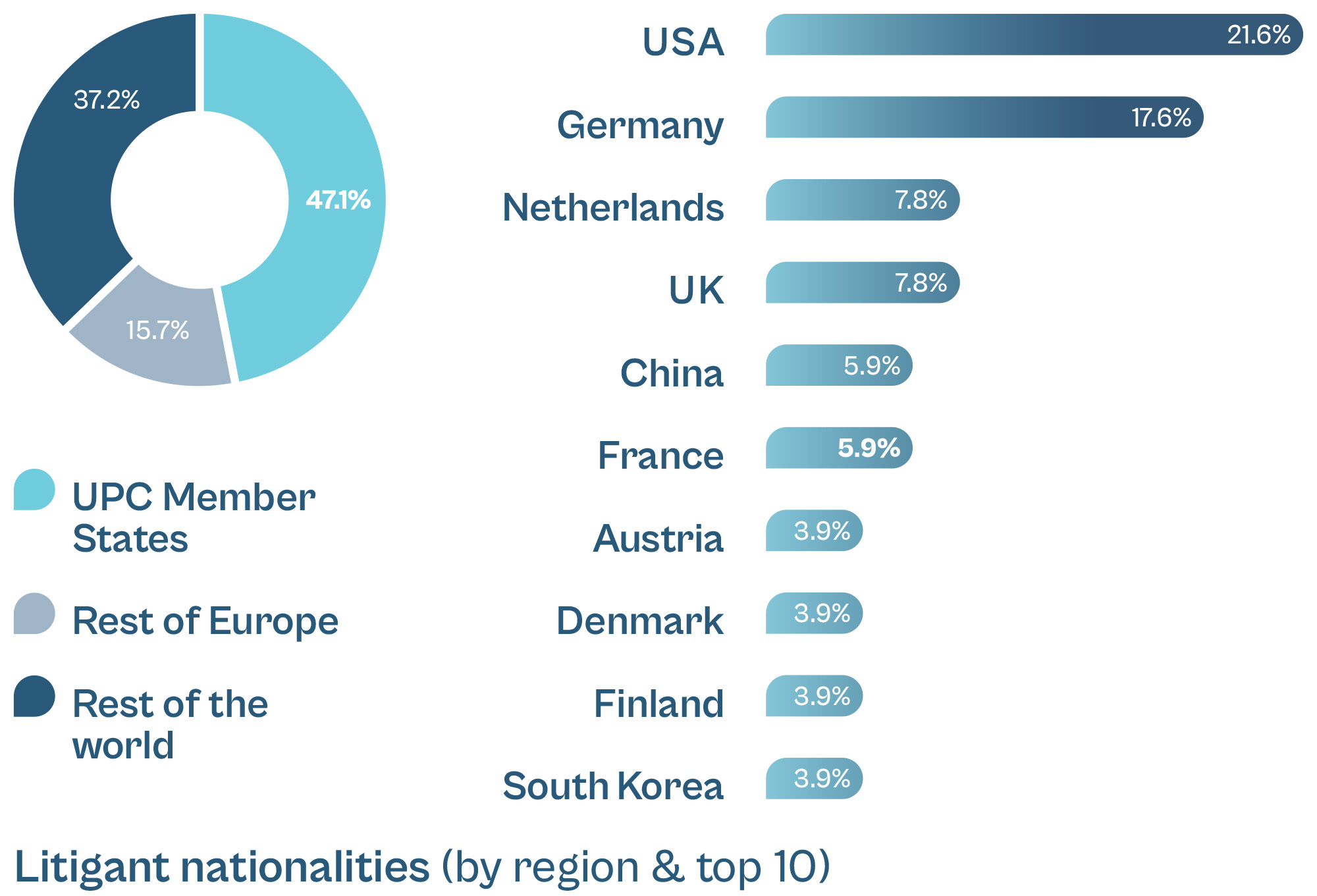
A review of the revocation decisions rendered by the Central Division since the UPC’s opening confirms that the Court has, in practice, become a genuinely international forum, and not merely a European one.
Out of the entities identified across the decisions reviewed, US parties are the single most represented nationality, accounting for 21.6% of all entities, ahead of Germany (17.6%), the Netherlands and the United Kingdom (7.8% each), and China and France (5.9% each).
Austria, South Korea, Denmark and Finland each represent 3.9% of entities, while Belgium, New Zealand, Canada, India, Italy, Cyprus, Switzerland, Spain and Poland each account for 2.0%.
Taken together, parties domiciled in Europe, whether in a UPC contracting member state or not, account for close to 63% of all entities identified.
The nationality and domicile of the parties bear directly on several procedural questions, and most notably the availability of an application for security for costs against a claimant with no establishment within a contracting member state.
Where are revocation actions heard? Paris, Munich and Milan
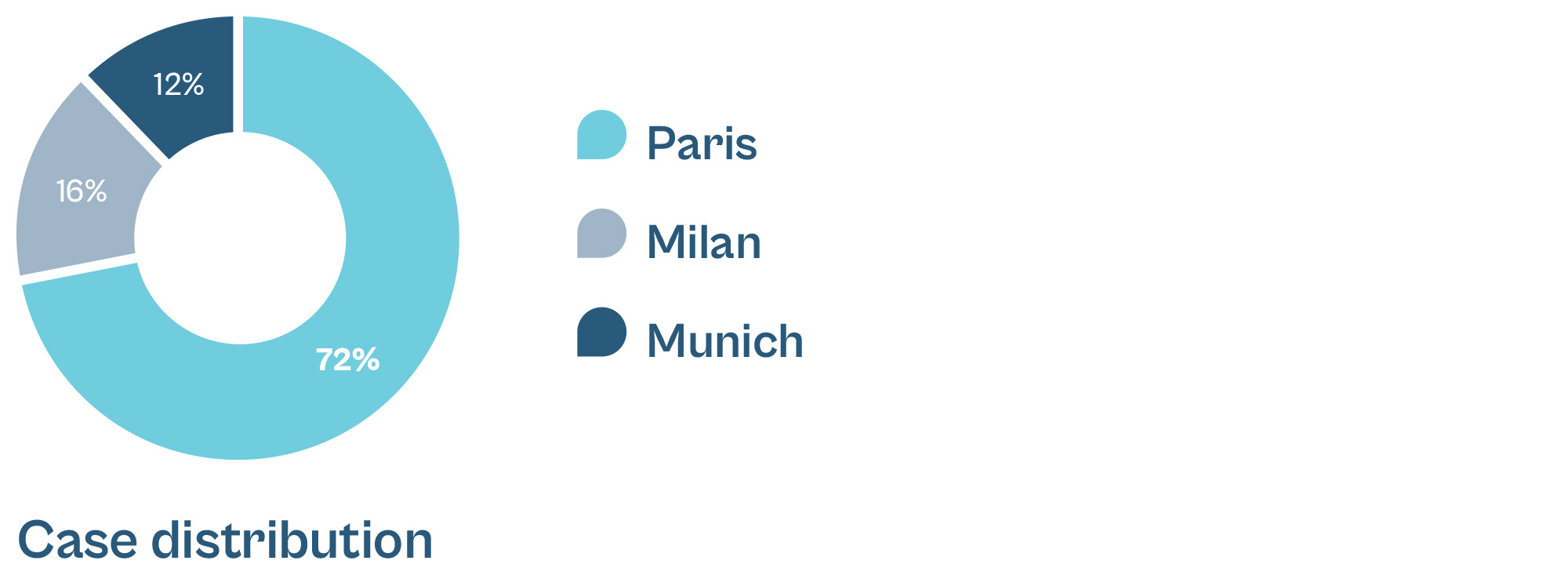
In principle, revocation actions fall within the exclusive jurisdiction of the Central Division of the UPC’s Court of First Instance.
Since the Milan section opened on 27 June 2024, replacing the competences originally earmarked for London, the Central Division has comprised its seat in Paris (Article 7(2) UPCA) and two further sections, in Munich and Milan, each allocated by technology field under Annex II to the UPC Agreement, as amended by the Administrative Committee’s decision of 26 June 2023:
- Paris (the Central Division’s seat): IPC sections B (Performing Operations; Transporting), D (Textiles; Paper), E (Fixed Constructions), G (Physics) and H (Electricity), together with all supplementary protection certificates (SPCs), regardless of whether the underlying patent falls under section A or C.
- Munich: IPC section C (Chemistry; Metallurgy, excluding SPCs) and section F (Mechanical Engineering; Lighting; Heating; Weapons; Blasting).
- Milan: IPC section A (Human Necessities, excluding SPCs), covering fields such as pharmaceuticals, medical devices, food, agriculture and consumer goods.
On the data reviewed, Paris hears close to three quarters of all Central Division cases.
What are the most successful grounds for revocation at the UPC?
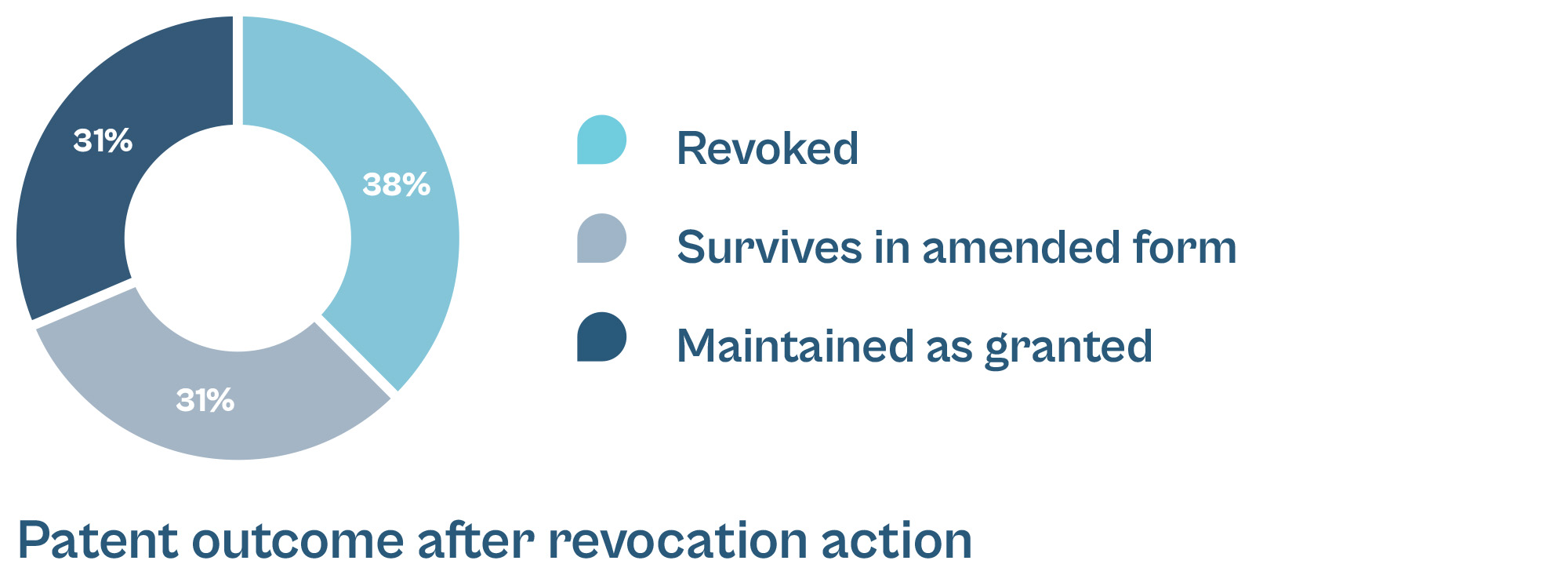
Across the decisions reviewed, close to 70% result in some alteration to the scope of the patent as granted: the claims are revoked in their entirety in 38% of cases, and limited pursuant to an auxiliary request filed by the proprietor in a further 32%.
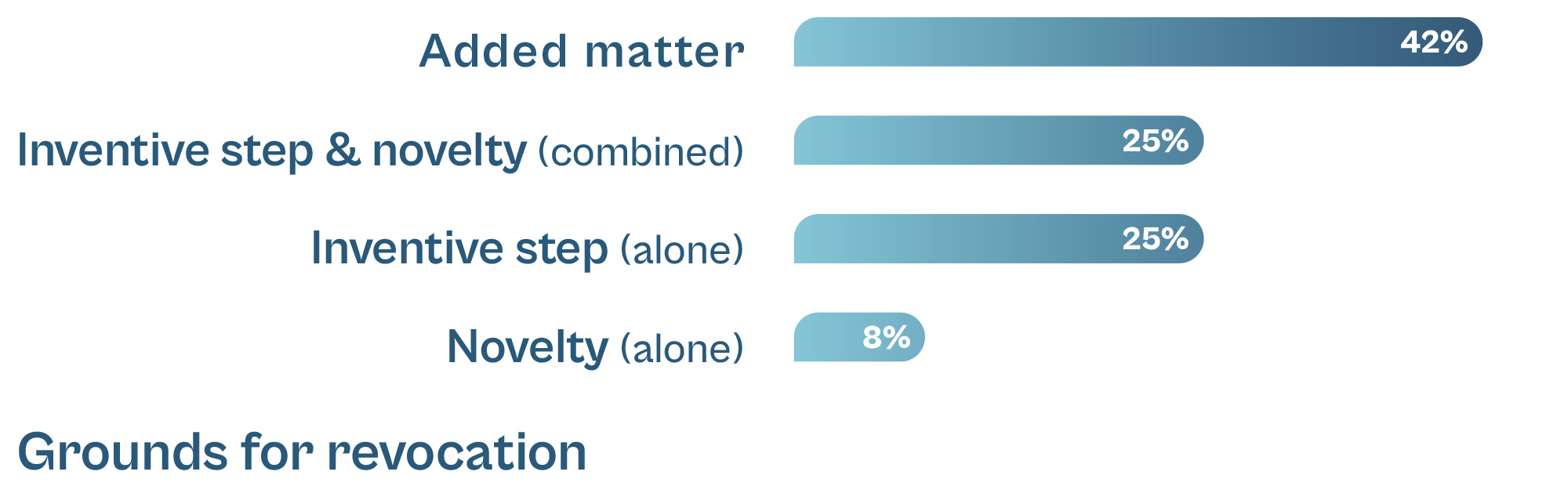
Where the patent is revoked outright, added matter is by far the ground most frequently relied upon, accounting for 42% of full revocations. In fact, a European patent may be revoked where its subject-matter extends beyond the content of the application as filed, or, for a patent granted on a divisional application, beyond the content of the earlier application as filed. The claims must not extend beyond what a skilled person would derive directly and unambiguously, using common general knowledge, from the whole of the application as filed.
A quarter of full revocations rest on lack of inventive step alone, and a further quarter combine lack of inventive step with lack of novelty.
Can a patentee counterclaim for infringement in a UPC revocation action?
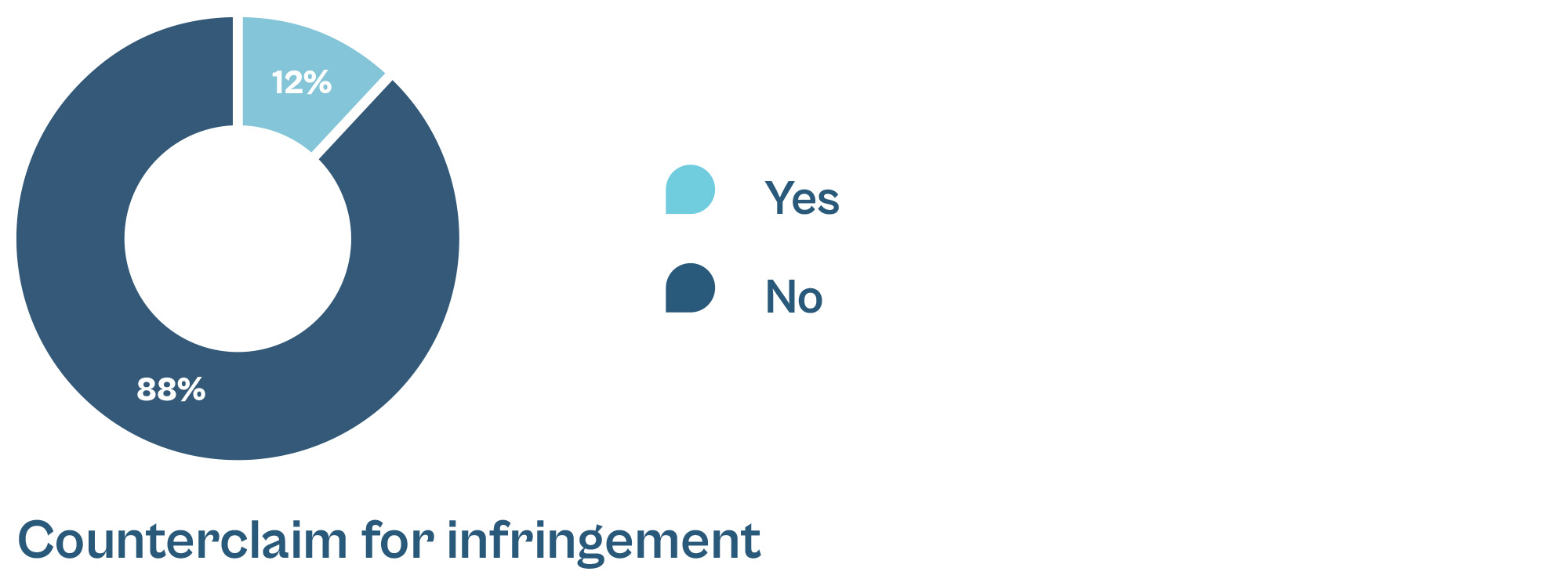
A revocation action does not always stay one-sided. In 12% of cases where the patent survives, the defendant, meaning the patent proprietor, responds with a counterclaim for infringement against the revocation claimant.
The defence to revocation, which must itself be lodged within two months of service of the statement for revocation, may include a counterclaim for infringement, subject to its own fee. The claimant then has two months to lodge a defence to the counterclaim.
How much does a UPC revocation action cost?
Costs before the UPC follow the “loser pays” principle: the unsuccessful party bears the successful party’s reasonable and proportionate legal costs, subject to a ceiling.
Bringing a standalone revocation action requires a fixed court fee, payable upfront and separate from the recoverable costs discussed below. That fee was €20,000 throughout most of the period covered by this data; since 1 January 2026, it stands at €26,500 for actions filed from that date. (Administrative Committee decision of 4 November 2025, Table of Court Fees, Section III).
At the end of proceedings, the ceiling on recoverable representation costs depends on the value of the action, assessed by reference to the value of the patent at stake.
| Value of the proceeding | Ceiling for recoverable costs |
| Up to €250,000 | Up to €38,000 |
| Up to €500,000 | Up to €56,000 |
| Up to €1,000,000 | Up to €112,000 |
| Up to €2,000,000 | Up to €200,000 |
| Up to €4,000,000 | Up to €400,000 |
| Up to €8,000,000 | Up to €600,000 |
| Up to €16,000,000 | Up to €800,000 |
| Up to €30,000,000 | Up to €1,200,000 |
| Up to €50,000,000 | Up to €1,500,000 |
| More than €50,000,000 | Up to €2,000,000 |
Relevant factors include the remaining lifetime of the patent, its territorial coverage, the relevant market value, etc.
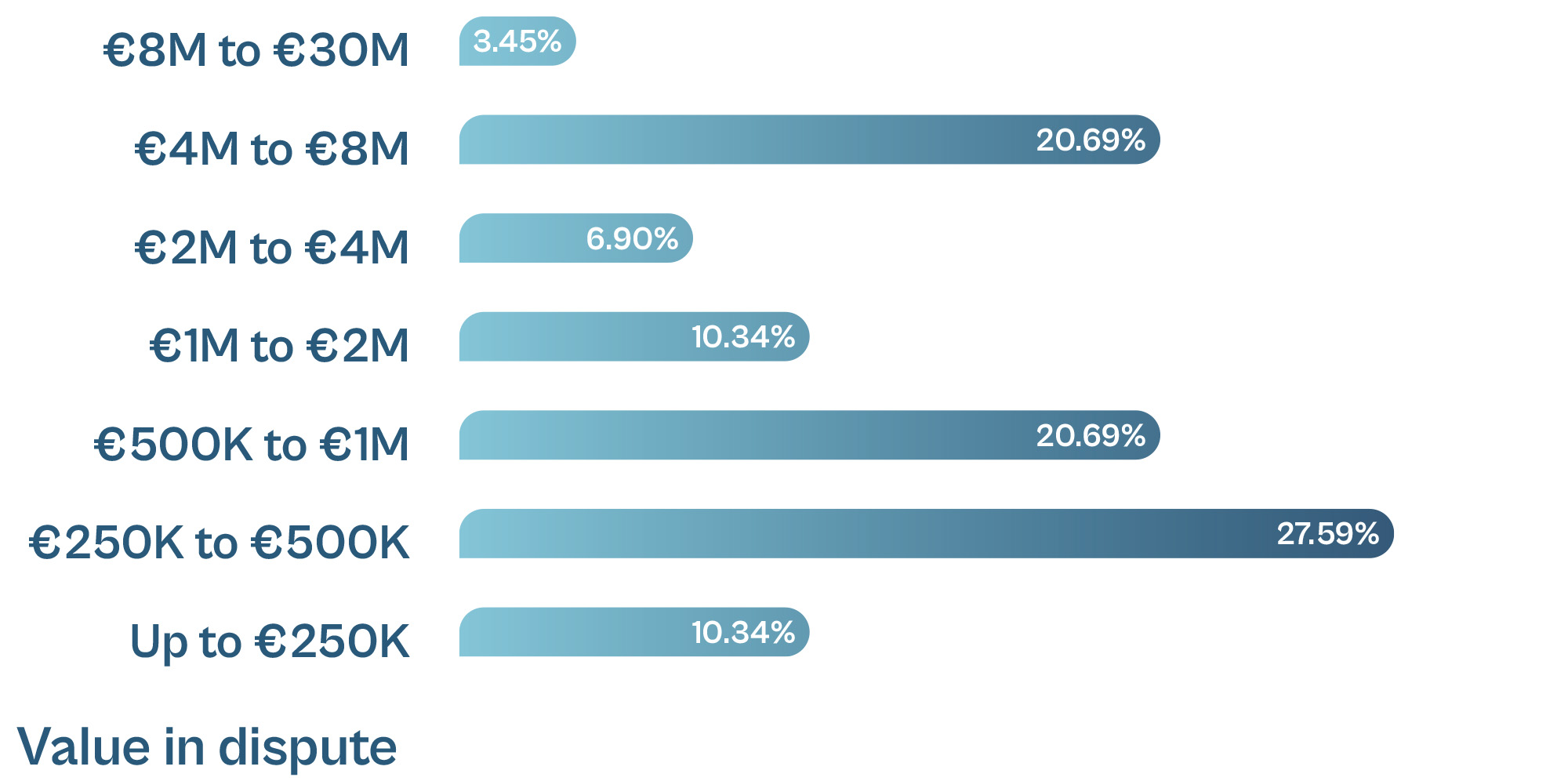
Across decided cases, the patent’s value has ranged from around €250,000 to €30 million, with close to 60% of cases below €1 million.
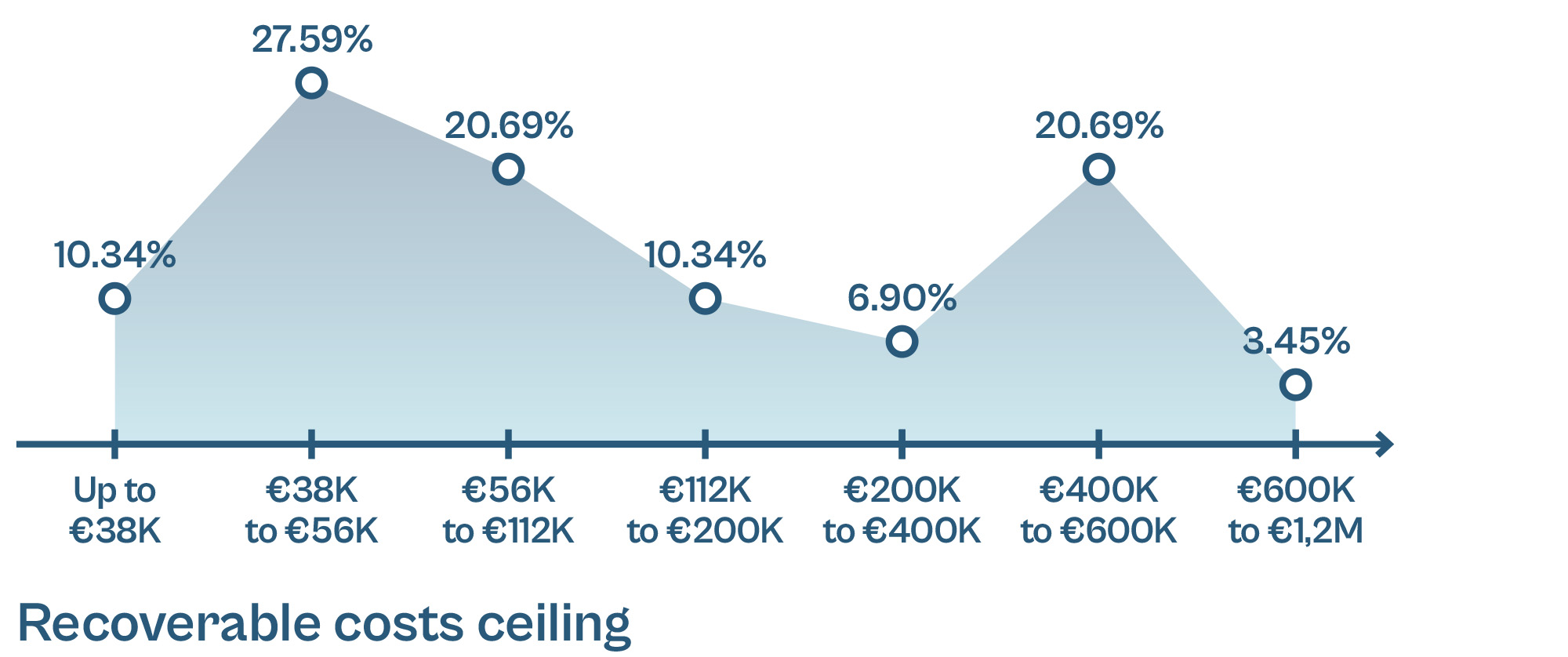
This means cost reimbursement ranging from up to €38,000 to up to €1.2 million with nearly 60% of cases below €112,000.
However, these are ceilings, not guaranteed awards: recovery is limited to what is “reasonable and proportionate”. In fact, where parties settle costs between themselves, reimbursement tends to land at around two-thirds of the ceiling.
The largest award to date was granted in Gilead Sciences v Academy of Military Medical Sciences, a remdesivir-related patent revoked by the Milan Central Division (UPC_CFI_552/2025, 4 May 2026), where the parties agreed on €800,000 against a €20 million dispute value.
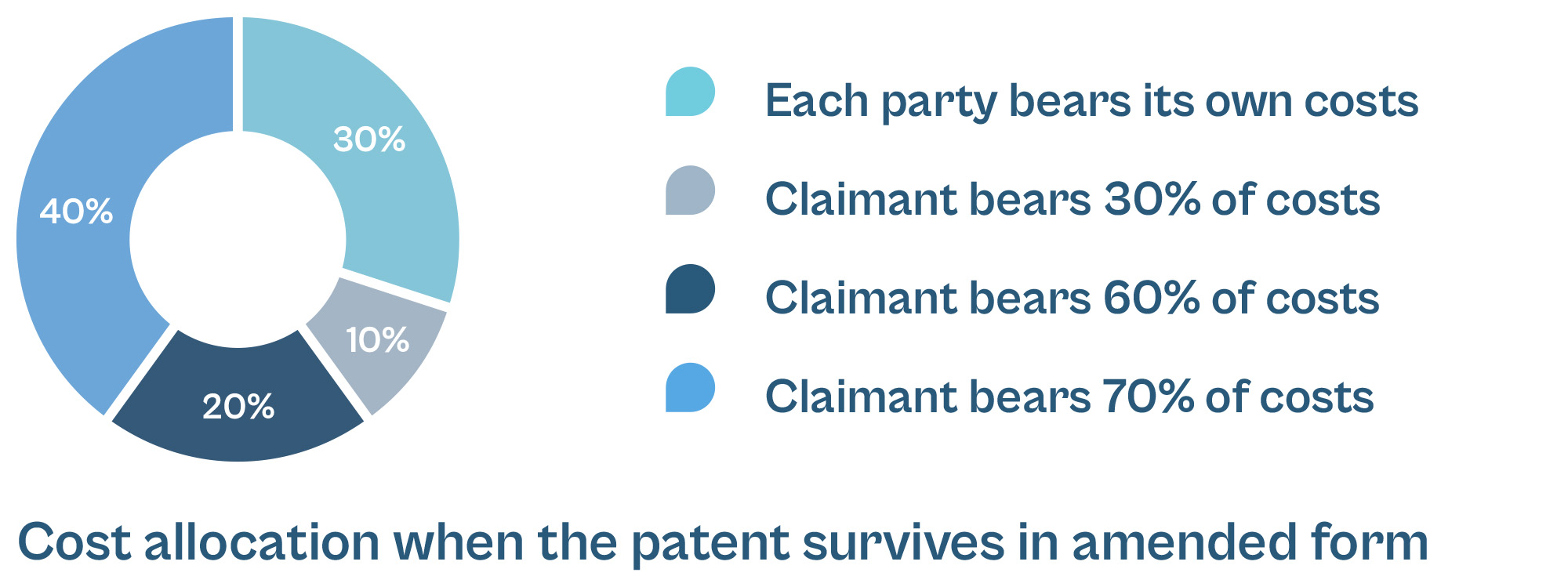
Finally, where a patent survives but only in amended form, the court apportions costs by reference to the significance of the limitation. Each party bears its own costs in roughly three cases out of ten; otherwise, the claimant typically covers 30% to 70% of the defendant’s costs, depending on how many grounds succeeded.
FAQ
How much does it cost to file a UPC revocation action?
Since 1 January 2026, a standalone revocation action requires a fixed court fee of €26,500, payable upfront.
How long does a UPC revocation action take from filing to decision?
Most standalone UPC revocation actions reach a first-instance decision in 8 to 17 months, with 13 months as a typical duration.
Which division hears most UPC revocation actions?
The Paris seat of the Central Division hears nearly three quarters of all cases. It holds exclusive jurisdiction over patents in IPC sections B, D, E, G and H, and over SPCs in sections A and C.
Can I recover my legal costs after winning a UPC revocation action?
Yes, within limits. Recoverable costs are capped by reference to the value in dispute, from €38,000 to €1.2 million in cases recorded so far.
Can the patent proprietor counterclaim for infringement in a revocation action?
Yes. In 12% of cases where the patent survives, the proprietor responds with a counterclaim for infringement, included in the defence to revocation and lodged within the same two-month deadline.